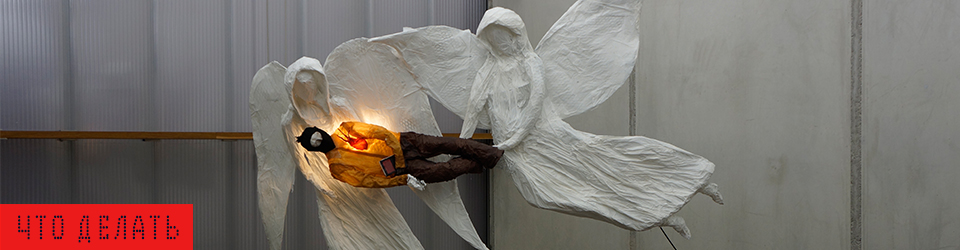
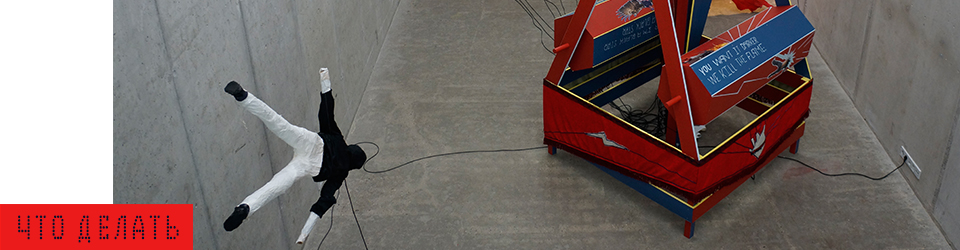
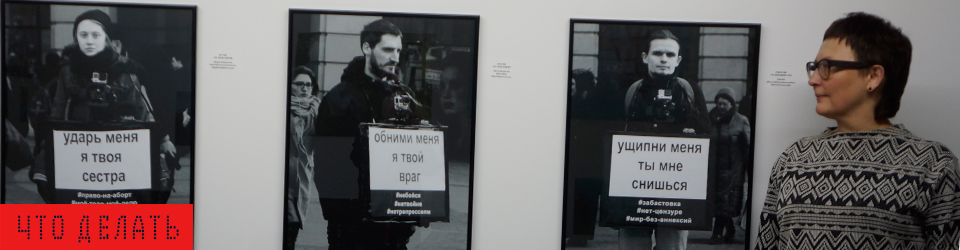
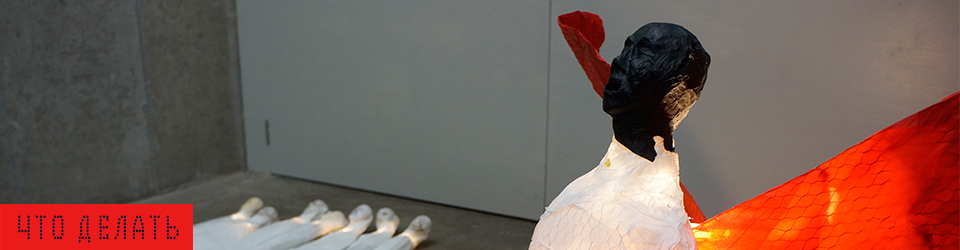
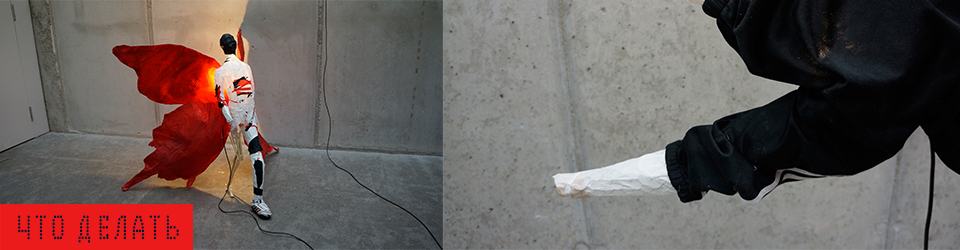
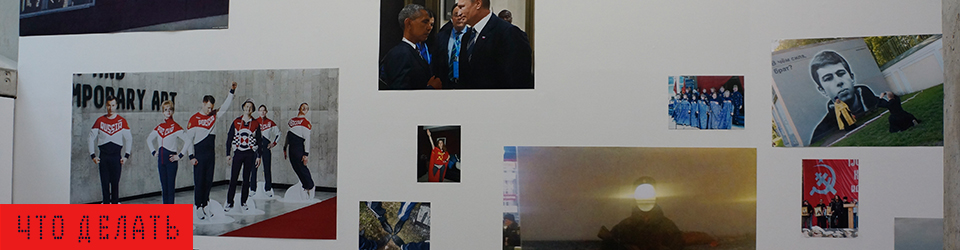
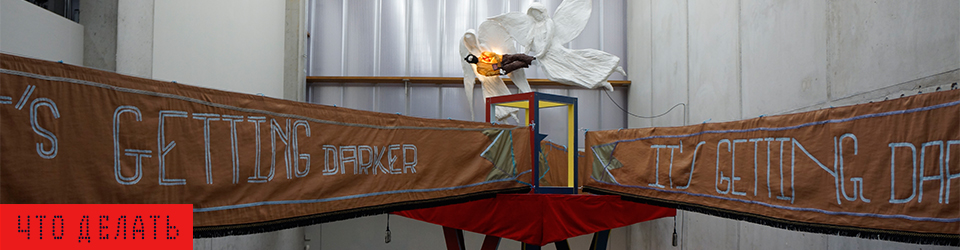
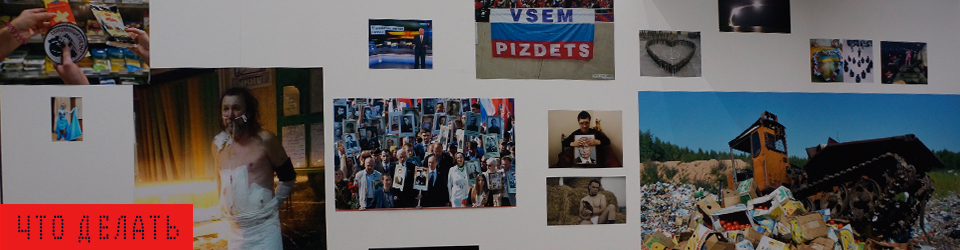
nezhnost / tenderness from chto delat 2020
a video performance by Chto Delat collective realized by Nina Gasteva, Tsaplya Olga Egorova, Nikolay Oleynikov and Dmitry Vilensky, May 2020, different locations
***
The collective Chto Delat (What is to be done?) was founded in early 2003 in Petersburg by a workgroup of artists, critics, philosophers, and writers from St. Petersburg, Moscow, and Nizhny Novgorod with the goal of merging political theory, art, and activism.
The group was constituted in May 2003 in St. Petersburg in an action called “The Refoundation of Petersburg.” The name of the group derives from a novel by the Russian 19th century writer Nikolai Chernyshevsky, and immediately brings to mind the first socialist worker’s self-organizations in Russia, which Lenin actualized in his own publication, “What is to be done?” (1902). Chto Delat sees itself as an artistic cell and also as a community organizer for a variety of cultural activities intent on politicizing “knowledge production”. The activity of collective takes responsibility for a postsocialist condition and actualization of forgetten and repressed potentiality of Soviet past and often works as a politics of commemoration. The collective make a strong focus on the issue of cultural workers labour rights and politics of comradeship.
From its inception, the collective has been publishing an English-Russian newspaper focused on the urgent issues of Russian cultural politics, in dialogue with the international context.
In 2013, Chto Delat initiated an educational platform—School of Engaged Art and also provides resources for a social center in Saint Petersburg called Rosa’s House of Culture. Since 2017, the Chto Delat collective, together with colleagues from Germany, founded the not for profit association in Berlin Chto Delat e.V., which allows to expand its work through institutional international funding, which was distributed to various projects in Russia and to the support of activist initiatives through the Mutual Aid Chto Delat Fund.
In 2014 the collective withdrew from the participation in Manifesta 10 in Petersburg as a local protest against the developing the Russian military intervention in Ukraine and annexation of Crimea and with this act has triggered a current debate on the participation and boycott of art events.
The activity of Chto Delat artistic cell is realizing across a range of media—from video and theater plays, to radio programs and murals—it include art projects, seminars and public campaigns. The works of the collective are characterized by the use of alienation effect, surreal scenery, typicality and always analyses of a concrete social and political struggles.
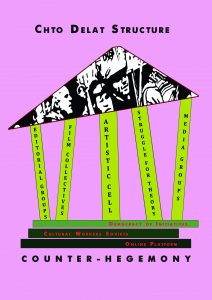
These activities are coordinated by a core group including Tsaplya Olga Egorova (artist), Artiom Magun (philosopher), Nikolay Oleynikov (artist), Natalia Pershina / Glucklya (artist), Alexey Penzin (philosopher), Alexander Skidan (poet and critic), Oxana Timofeeva (philosopher), Dmitry Vilensky (artist) and Nina Gasteva (choreographer).
The collective becomes part of Journal of Journal a project of documenta 12 in Kasel in 2007; the fellows of the 11th edition of Gwangju Biennale in 2016; Garage Museum Field Research Programm in 2017; and many other long terms collaborations with large scale institutions.
The economy of Chto Delat collective is supported by its own Mutual Aid Fund which accumulates all incomes from projects, grants, royalties, donations and sales of artistic work. This fund is redistributed for the support of the different activity of collective and for the benefits of larger community.

The institutional activity of Chto Delat is supported between 2017 and 2022 by the grant from Foundation for Arts Initiatives
Recent exhibitions include: Proregress: The 12th Shanghai Biennale 2018, China; The Modern Art: 1960–2000. Restart, Tretyakov Gallery, Moscow (2018); MUAC (The Museo Universitario Arte Contemporáneo), Mexico (solo show 2017); KOW BERLIN (solo show 2017 and 2015), San Paulo Biennale (2014); Art, Really Useful Knowledge, Museo Nacional Centro de Arte Reina Sofía, Madrid (2014); Art Turning Left: How Values Changed Making 1789–2013 – Tate Liverpool, Liverpool (2013); FORMER WEST: Documents, Constellations, Prospects,, Haus der Kulturen der Welt, Berlin (2013); 10th Gwangju Biennale, Gwangju (2012); Chto Delat in Baden-Baden, Staatliche Kuntsthalle, Baden-Baden (2011); Chto Delat Perestroika: Twenty Years After: 2011–1991, Kölnischer Kunstverein, Cologne (2011); Ostalgia, New Museum, New York (2011); Study, Study and Act Again, Moderna Galerija, Ljubljana (solo show 2011); The Urgent Need to Struggle, Institute of Contemporary Art, London (2010).
The works are part of the collections:
The Museum of Modern Art , New York; Van Abbemuseum, Eindhoven; Museum Reina Sophia, Madrid; Le Centre Pompidou, Paris; MUDAM, Luxemburg; Tretyakov Art Gallery, Moscow; MUAC (The Museo Universitario Arte Contemporáneo) Mexico City; KIASMA, Museum for Contemporary Art, Helsinki; Kadist Art Foundation, San Francisco; Museum of Conteporary Art, Belgrade; CAAC, Sevilia, Museum of Contemporary Art (MoCA) Skopje, North Macedonia and others.
The full archive of the activity of Chto Delat is part of the archive’s collection of The Garage Museum, Moscow (purchased in 2022)
The catalogue of the show “When we thought we knew all the answers, Life has changed all the questions” – exhibition took place at Sevilia, Spain in May 2017 and Mexico City from November 2017 till March 2018 at The Museo Universitario Arte Contemporáneo, also known as MUAC
Chto Delat poster timeline from the catalogue published by Seccesion, Vienna (2014)
Chto Delat catalogue published by Kunsthalle Baden-Baden (2011)
Share
